GLIDE
AAC Device — Multi-activity Platform
Project Description
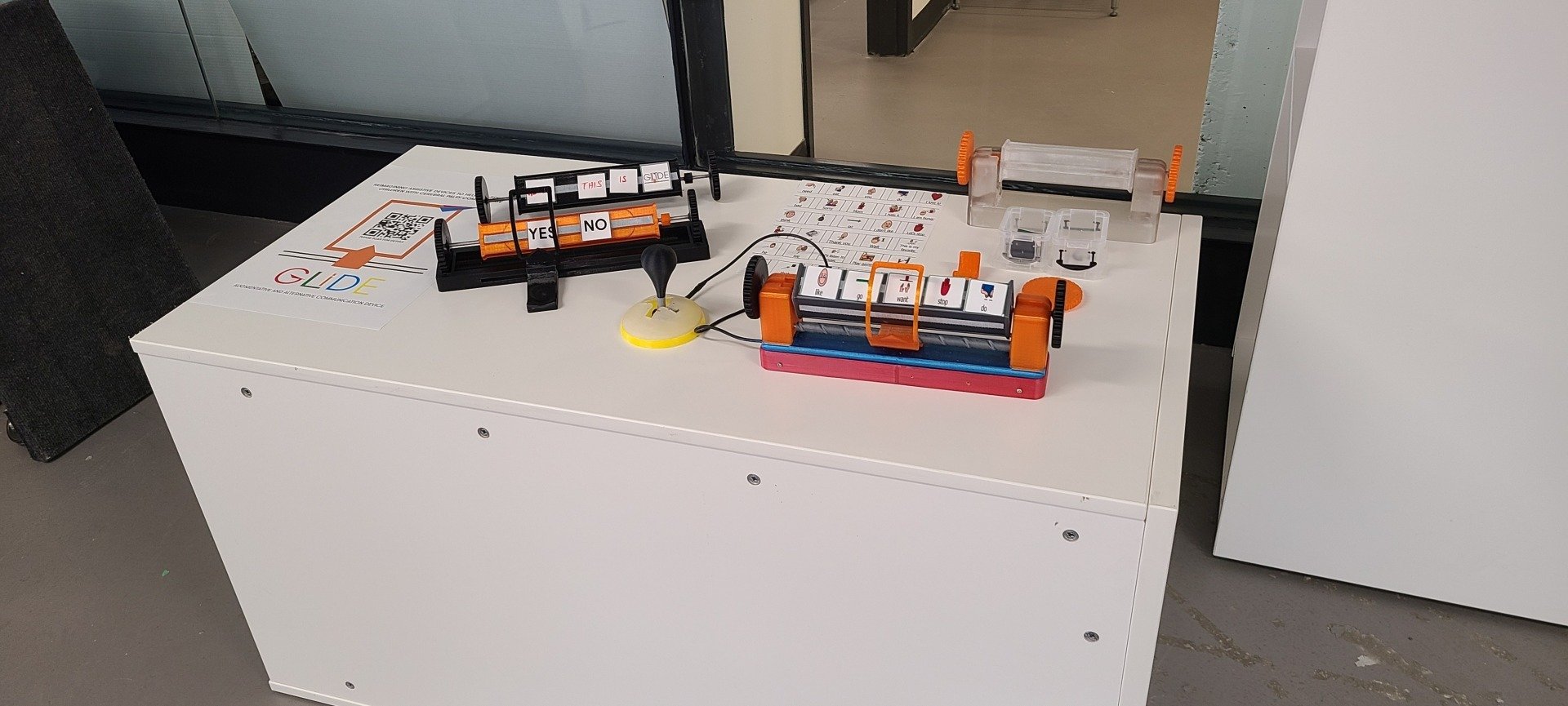
GLIDE is an Augmentative and Alternative Communication (AAC) device — a highly personalised multi-activity platform geared to the individual needs and abilities of non-speaking children with Cerebral Palsy (CP), aged 4 to 14, in a classroom setting. It functions simultaneously as a game board, communication device, mathematics teaching tool, and vocabulary builder, while enhancing sensory and fine motor skills.
Project Videos
User Group — Cerebral Palsy
Cerebral Palsy (CP) is a group of disorders that affect a person's ability to move and maintain balance and posture. About 75–85% of children with CP have spasticity — tightness of, or inability to control muscles. Many children with CP have challenges communicating with speech, and too often it is assumed that a child who does not speak is unable to connect with or understand the world around them.
With appropriate materials and focused activities (interventions) children with CP can become more able to communicate thoughts and feelings, and eventually learn how to better process emotions in a safe and non-stressful environment.
Primary Objective
The aim is to design and create a learning tool that stimulates eye-hand coordination, improves fine motor skills, and enhances communication skills for non-speaking children aged 4 to 14 with CP. With this tool it is hoped that children will participate more actively, act independently, and improve their self-confidence and self-esteem.
Research
Primary Research — Empirical Data Summary: Observations revealed three core design challenges: the need for attractive assistive devices that appeal to a child's senses (Retro Fitted ACC Tools); the need for intuitive, easy-to-use tools that encourage independent activity (Lack of Focus); and the need for tools tailored to each child's ability level (Varied Student Abilities).
Secondary Research — Subject Matter Expert Interviews: Interviews were conducted using a set of questions, oral and written responses, and snowball sampling with four specialist groups — Physiotherapists, Occupational Therapists, Art Therapists, and Speech Therapists — focusing on daily communication and activities.
Key findings from the SME interviews: therapy must be adapted to the child's interests and needs (including talking to parents); stigma-free Assistive Communication Devices can and should be used by all children; and children with developmental disabilities may require more processing time — patience is essential.
Field Research — What Is Out There?
Existing AAC devices are often not mass produced and are very expensive. Current market solutions include the Dynavox ($5,000+), 32 Message Communicator ($399), PCS™ ThinLine Set 1 ($150, PC/MAC not included), 4 Plate Communicator Say It Play It ($165), and iPad Speech Case ($500, software and iPad not included). None of these are affordable, widely available, or tailored to the individual child.
Proposed Solution
GLIDE combines the digital vocabulary breadth of AAC apps with the tactile, physical engagement of picture card sets — creating a low-cost, flexible, child-centred communication device that encourages independent decision making. By creating objects that appear to be toys or games with universal application, children with CP find them attractive and worthy of their curiosity.
Phase of Development
The development followed five phases: Sketching → Prototyping → 3D Rendering → 3D Printing → Test & Feedback.
Product Features
Active Participation: The device requires active participation and involvement while encouraging increased cognition and fine motor skills. The joystick aids in improving fine motor skills and eye-hand coordination.
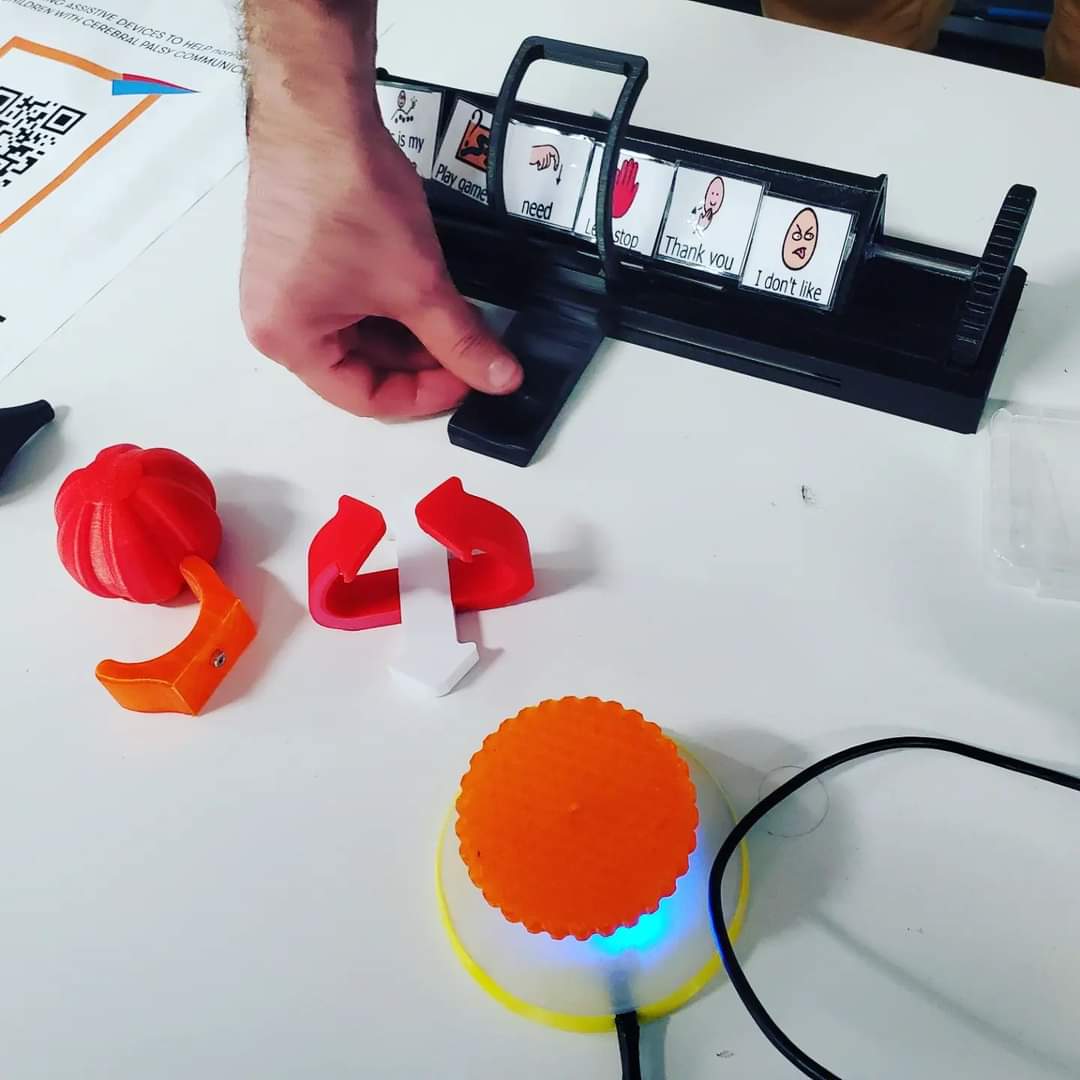
Tailored Replaceable Grips: By providing adaptability for successful initial interactions, the platform acts as a foundation for building self-esteem and self-confidence. The joystick accepts replaceable grips in a wide variety of shapes and sizes to suit each child's physical abilities.
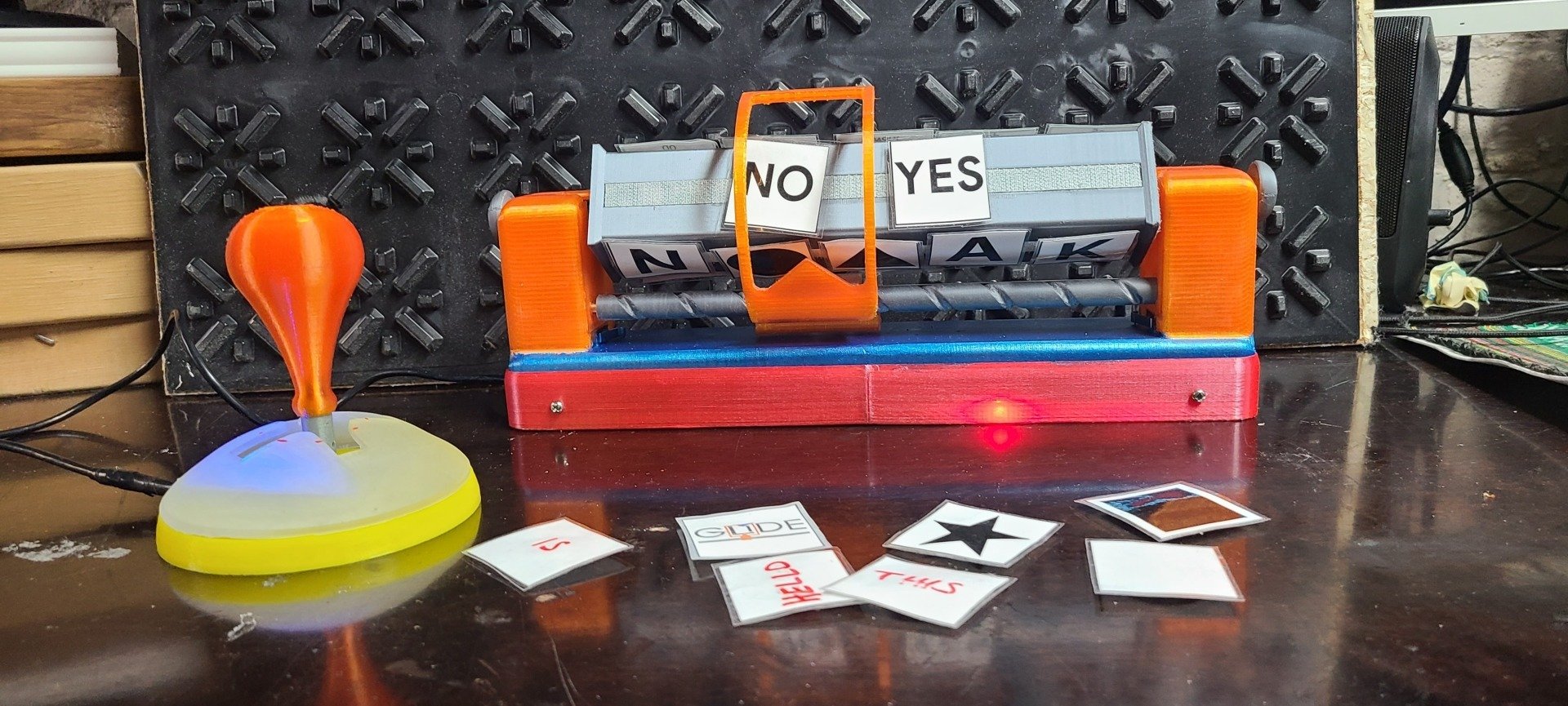
Continuous Highlight Feature: The child's chosen message remains static in the view finder until it has been received — eliminating potential miscommunication and encouraging independent decision making. After navigating, the selected message does not change until the child moves the joystick.
Multi-activity Platform: Can be used as a game board, communication device, mathematics teaching tool, and vocabulary builder while enhancing sensory and fine motor skills. Features include a removable view finder (adaptable and magnifiable for the vision impaired), limit switch and view finder lights for sensory stimuli, and easily swappable content blocks to prepare activities.
Adaptable Accessories: Designed for use on a wheelchair tray or vertical standing tray. The view finder block turns in 5-degree increments providing a clear vantage point from any sitting or standing position. Adaptability and accessibility are key — understanding the child's physical abilities and body posture will help them engage successfully.
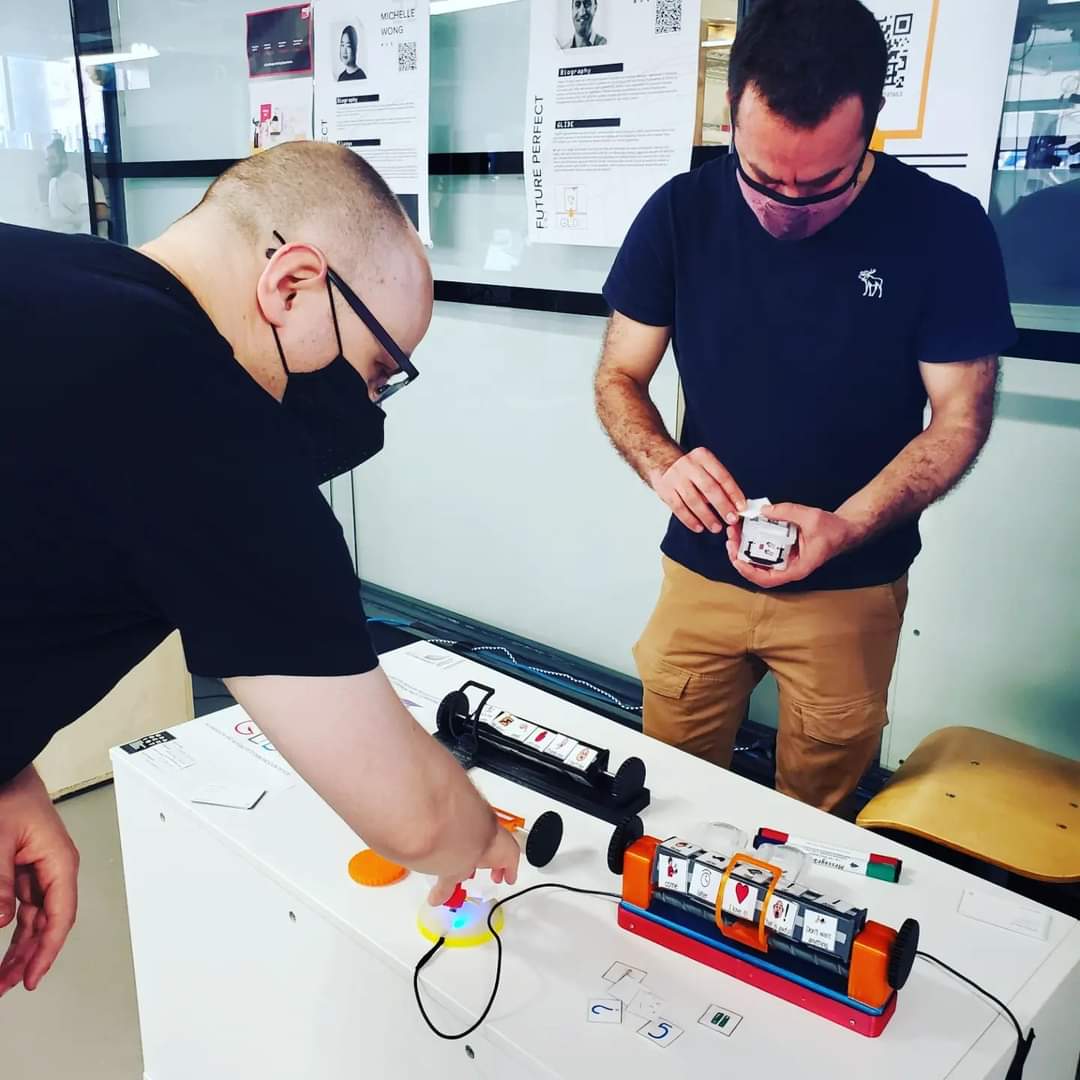
Encourages Socialising: Can be used for single or communal activities — multiple units can sit on a shared table, enabling children to learn and communicate together.
Technical — Assembly & Electronics
Most parts are 3D printed and designed for easy printing with minimal assembly. The electronics are affordable and widely available: Arduino Uno, Stepper Motor, Servo Motor, 5/8" Steel Round Rod, and Velcro.
Dimensions: Main platform 330mm × 42mm. View finder aperture 42mm. Joystick housing 96mm wide × 140mm tall. Joystick knob 73mm wide × 95mm tall.
Location & Context
Designed for use in Intensive Support Programs (ISPs) with classroom students who have behavioural, communication, intellectual, or physical needs. The device is positioned as Responsive and Experimental — because it is aimed to be a highly personalised and adaptive device, mass production or significant commercial gain is not the primary goal.
Strategic Partners
Strategic partners include, but are not limited to, School Boards, hospitals, special needs teachers, classroom assistants, parents, and other caregivers directly involved with children exhibiting moderate-to-severe forms of Cerebral Palsy. By canvassing the 3D Printing community on social media, volunteers can be found to print parts for the platforms.
Detailed project process — PDF files
⇓ GLIDE Process Book PDF ⇓ Secondary Research PDF ⇓ Primary Research PDF